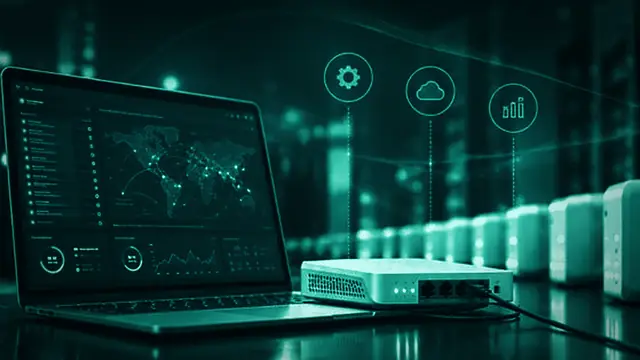

When an ISP subscriber notices that their connection is performing poorly, the most common path is to open a support ticket. Technical support is then engaged and must understand the state of the connection, the CPE, and sometimes even the subscriber's home network before determining the source of the problem. This process could be automated through management protocols.
For example, when experiencing issues while streaming video, the subscriber could select an option such as “I'm having internet problems” in the provider's application. A diagnostics platform could then automatically check the WAN connection and the Wi-Fi environment; if it identifies that the Wi-Fi channel currently in use is congested, the platform could switch to a less congested channel. This way, the problem could be resolved quickly without requiring technical support.
Remote management protocols such as TR-069 and TR-369, combined with standardized data models, allow providers not only to retrieve information but also to run diagnostics and make changes remotely. The same set of capabilities traditionally used by technical teams can serve as the foundation for new support and automation options.
From Remote Management to the Digital Experience
In a traditional architecture, ACSs and USP Controllers serve as the foundation for remote configuration, diagnostics, and troubleshooting operations, integrating with tools used by the provider's operations and technical support teams. However, these capabilities are not made available to the subscriber.
A diagnostics and configuration services platform enables the ISP to integrate applications that offer subscribers self-service options without having to deal with the details of each CPE or the underlying management protocols.
Operations such as “diagnose my connection,” “create a guest network,” or “configure parental controls” can be presented to the subscriber through an application, website, or chatbot. These operations can be automated by a platform and carried out through remote management.
This makes it possible to provide more efficient support regardless of the support team's technical level, reducing the need for specialized technicians.
The value of TR-069/TR-369 is no longer limited to remotely accessing a CPE; it also lies in the ability to turn capabilities already available in the network into digital services.
Beyond Diagnostics
The same architecture can offer other self-service features. The subscriber can change the Wi-Fi network name or password, view connected devices, or run a diagnostic again after following a recommendation.
In addition, if an automated process cannot resolve the subscriber's problem, a support ticket can be opened automatically with the results attached. Instead of starting the support process without context, the support team can receive the checks that have already been performed, reducing triage steps and providing more objective information about the state of the connection. This makes support faster and more accurate.
AI Agents as an Interpretation Layer
As the amount of collected information grows, another challenge emerges: turning technical data into an understandable diagnosis and an appropriate action.
AI agents can operate at this layer, consuming the information collected by the platform and correlating different indicators to produce explanations and recommendations in natural language for both the subscriber and the support team.
An AI agent does not need unrestricted access to the CPE, nor does it need to freely decide on and apply any possible change. The platform can expose only predefined capabilities and enforce policies, permissions, and limits before any action is executed. In this way, AI acts primarily as an interpretation and interaction layer, while the provider's infrastructure continues to determine what can actually happen on the network.
From Self-Service to Self-Healing
In addition to reactive diagnostics, performed after a problem has been identified, predictive mechanisms can use telemetry metrics and behavioral patterns to identify conditions that are likely to result in service degradation.
The next step is to allow certain situations not only to be identified, but also to be corrected without depending on an explicit request from the subscriber. This is where the concept of self-healing emerges: the ability to detect certain network conditions and automatically execute a corrective action.
One possible evolution is to move forward gradually, starting with identifying and recommending actions, then progressing to execution with human approval, and finally automating only operations that are sufficiently well understood and controlled.
In this model, AI agents can assist in interpreting information and selecting possible actions, while rules, policies, and limits defined by the provider determine what can actually be executed. AI can initially support the operator, and as certain actions prove predictable and safe, some of them can be incorporated into automated self-healing workflows.
Conclusion
TR-069 and TR-369 can do more than remotely configure CPEs. When integrated with the provider's applications, they can serve as the foundation for enabling subscribers themselves to identify problems, run diagnostics, and perform simple actions without contacting technical support.
Adding automation layers and AI agents expands this possibility by turning technical metrics into clearer diagnoses, recommendations, and, when appropriate, controlled actions.
The evolution of self-service can be gradual, but making reliable diagnostics and self-service actions available already changes how providers use the capabilities present in their CPEs and creates a foundation for higher levels of automation in the future.
Venko works at the intersection of CPEs, management protocols, and software platforms, enabling providers to turn these capabilities into diagnostics, self-service, and automation services for their subscribers.
Talk to a Venko specialist by clicking here and learn more.
Source: Venko Networks.